FAQsHome Air Conditioning FAQs
Straight answers on cost, disruption, warranties and winter heating for home installations.
How long does a home air conditioning installation take?+
A single-room wall-split is typically fitted in one day. Multi-split systems serving 2–4 rooms usually take 2–3 days, and ducted whole-home systems 3–5 days depending on ceiling access.
Do I need planning permission for a home air conditioning unit?+
Most residential installations fall under permitted development in England, provided the external condenser is under 0.6 m³, more than 1 m from your boundary and not on a wall facing a highway. Listed buildings and conservation areas need explicit consent — we flag this at survey.
How disruptive is the installation to my home?+
Very little. Our engineers use dust sheets, work from one room at a time, and drill a single 65 mm core through the external wall per indoor unit. Pipework is routed in slim white trunking or first-fix chased into the wall if the room is being decorated.
What refrigerant do modern home systems use — R32 or R410A?+
All new residential systems we fit run on R32, which has roughly a third of the global warming potential of the older R410A gas and is around 10% more energy efficient. Legacy R410A units can still be serviced but are no longer specified on new installs.
Will a modern air conditioner also heat my home in winter?+
Yes. Every unit we fit is a reverse-cycle heat pump — it delivers heating down to around −15 °C outside with a Coefficient of Performance (COP) of 3.5–4.5, meaning roughly 3.5–4.5 kW of heat per 1 kW of electricity. Cheaper to run than a gas boiler at current unit rates in most homes.
What warranty do I get on a home installation?+
You get the manufacturer's parts warranty plus a 2-year Airtastic workmanship warranty on the pipework and install. On selected brands we can arrange cover of 3, 5 and up to 7 years through our supplier, who holds the manufacturer accreditations. Every manufacturer term has conditions attached, so we tell you at survey which one applies to the system you are quoted and what keeps it valid.
Do I need annual servicing at home?+
For residential use we recommend a service every 12–24 months. It keeps the manufacturer warranty valid, clears the filters and drain, and checks the refrigerant charge — a 30-minute visit that typically costs £45 for a single unit.
Which brands do you fit in homes?+
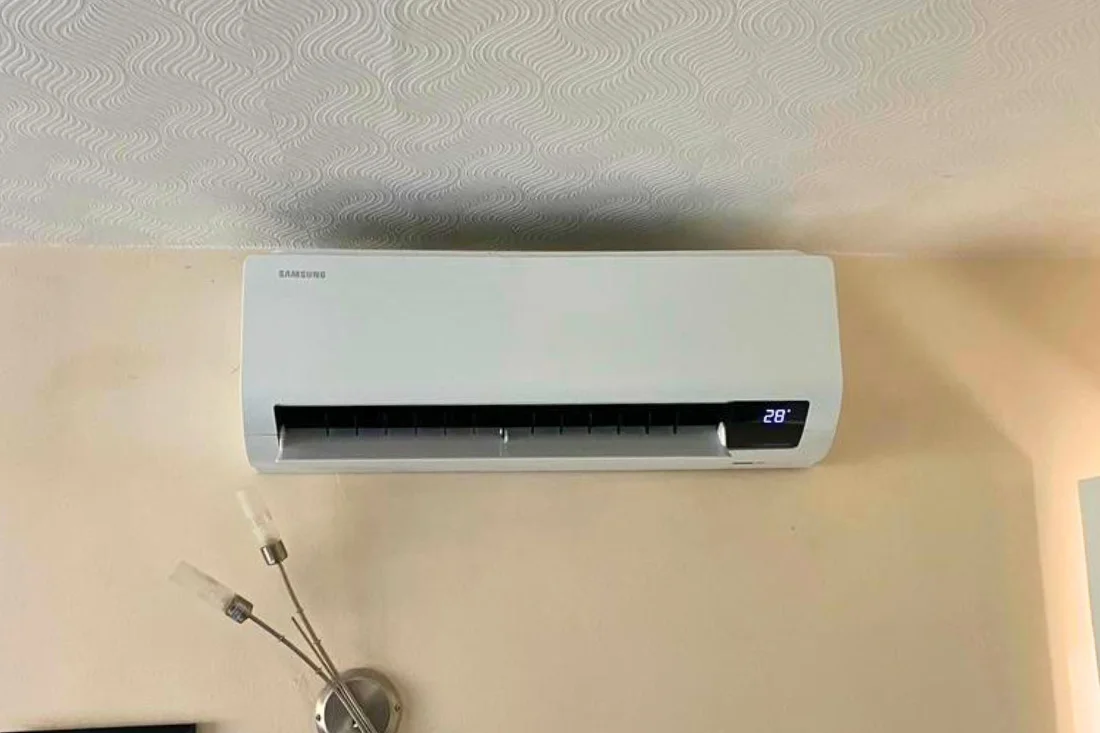
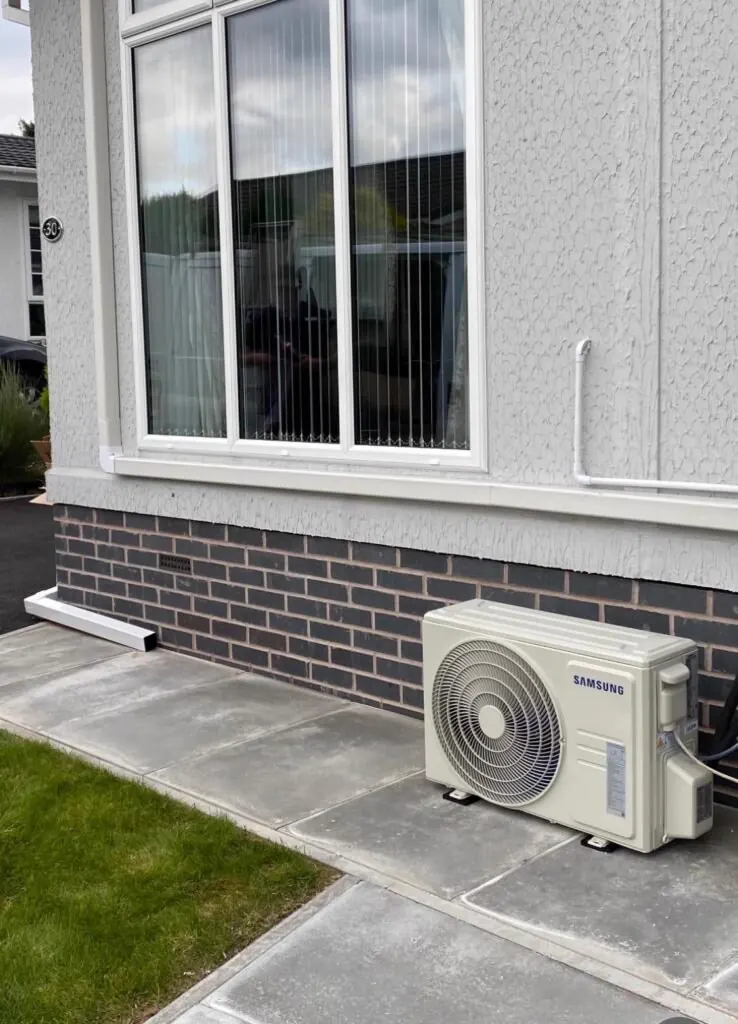
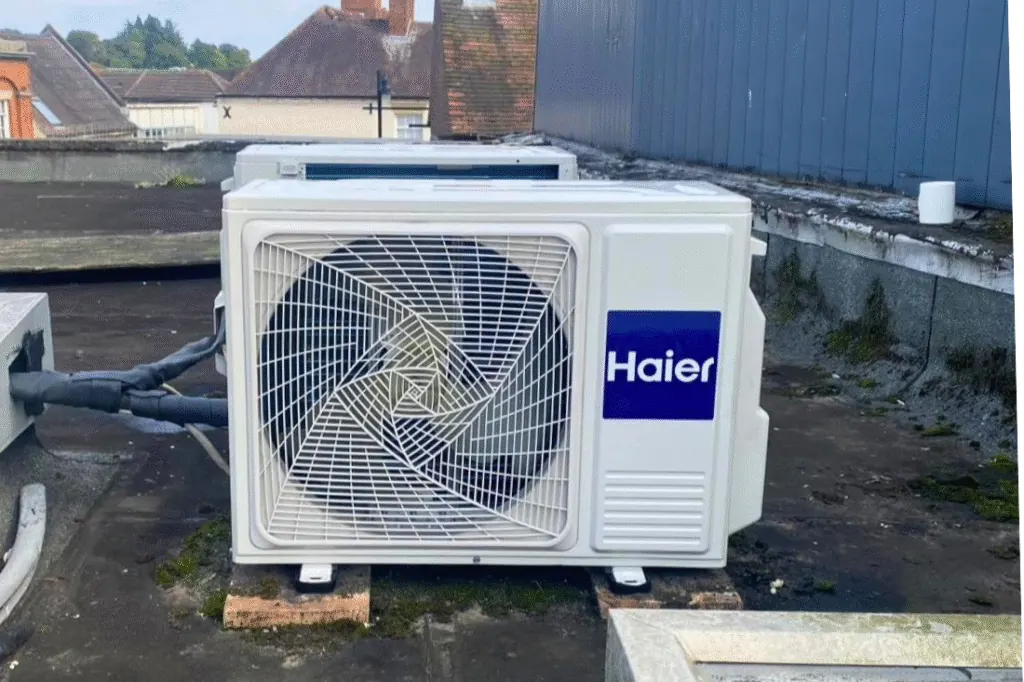
Daikin, Mitsubishi Electric, Samsung, LG, Fujitsu, Toshiba, Panasonic and Haier. We'll recommend a specific model at survey based on room size, budget, noise sensitivity (bedrooms) and how the outdoor unit will look on your property.
Are your engineers qualified to work on refrigerant systems?+
Yes — all Airtastic engineers hold F-Gas Category 1 certification (required by UK law to handle refrigerants), are Part P competent for the electrical connection, and are fully insured to £5 million public liability.
Can air conditioning heat my home in winter?+
Yes. Every unit we fit is a reverse-cycle heat pump, so the same system that cools a room in summer runs in reverse to heat it in winter, with no second appliance and no separate install. A well-specified modern R32 system is rated to keep heating down to around −15 °C outside, though output does taper as the temperature falls. Our guide, Can air conditioning heat your home in winter?, covers this in full.
Is air conditioning expensive to run in heating mode?+
In heating mode a well-specified system achieves a Coefficient of Performance of roughly 3.5 to 4.5, meaning about 3.5 to 4.5 kW of heat for every 1 kW of electricity it draws, because it moves heat that already exists in the outside air rather than burning fuel to create it. The real-world figure always depends on the outdoor temperature, the unit and how the room is used, but heating a single room with one efficient unit often makes more sense than firing the whole central-heating system just to warm one space.
Do I need a separate heat pump to get heating?+
No. Reverse-cycle air conditioning is a heat pump. The same wall-mounted indoor unit and outdoor condenser handle both jobs, just a different setting on the remote. Be clear on the limit, though: this is air-to-air heating. It warms the air in the room, it does not heat water for your radiators or your taps, so it is not a like-for-like swap for a whole-house wet central-heating system.
Does air conditioning qualify for the Boiler Upgrade Scheme?+
No. Air-to-air heat pumps, which is what reverse-cycle air conditioning is, do not qualify for the Boiler Upgrade Scheme. That grant applies to air-to-water and ground-source systems only, so be wary of anyone implying otherwise.