
Beer Cellar Cooling Installation & Restaurant Air Conditioning
Keeping hospitality cool where it counts
For a pub, bar or restaurant, cooling isn't one job — it's two. The cellar has to hold beer at the temperature the brewery intended, all day, every day. Front of house and the kitchen have to stay comfortable for customers and workable for staff through a full service. Airtastic designs, installs, services and repairs both — with F-Gas certified engineers across Stoke-on-Trent, Staffordshire and a 50-mile radius.
Your cellar temperature makes or breaks the beer
The industry standard for a mixed cellar serving cask and keg is 11–13 °C — Cask Marque, the beer-quality accreditation body, audits pubs to a band of 10–14 °C. Run warmer and cask ale secondary-ferments too hard: excessive fobbing, cloudy pints and flavours the brewer never intended. Stored near freezing, chill hazes form — and they can become permanent.
It matters commercially, not just technically. Cask Marque research published in 2019 found 97% of drinkers were happy with cask served at 11–13 °C — satisfaction dropped to 52% once the pint passed 14 °C, and in summer one in three cask pints was served above that line.
Vianet's 2019/20 report with Cask Marque, drawn from 570 million pints across 11,000 sites, found 22% of cask ale was served at the wrong temperature. Warm beer gets left, wasted or refunded.
What a cellar cooler actually is
A purpose-built split refrigeration system: an evaporator inside the cellar matched to a remote outdoor condensing unit. Unlike comfort air conditioning, it's designed to hold a room cold — purpose-built units control temperatures down to around 4 °C and use wide-spaced, brewery-specification coils that resist the dust and debris of a working cellar.
And it runs essentially continuously: brewery guidance is never to switch cellar cooling off, even briefly, because the beer pays for it.
Why maintenance pays for itself
The British Beer & Pub Association puts the cellar at 5–15% of a pub's energy cost, with cellar cooling the biggest single share — and a poorly maintained cellar chiller can use up to 25% more energy. Its research found 40% of landlords either don't maintain their cellar equipment or don't know who does.
Trade guidance suggests even running just 1 °C too cold adds around 10% to running costs. Dirty coils, blocked airflow from an overfilled cellar and slow refrigerant leaks are what we find behind most bank-holiday breakdowns.
Cellar cooling installation
Whether you're fitting out a new bar, replacing a cooler that's finally given up, or taking on a cellar that has never held temperature properly, we design and install the system around the cellar in front of us — not a catalogue default.
Sizing is the part that gets skipped most often: cellar volume, insulation, how often the door opens, barrel throughput and heat from adjoining kitchens or plant all change the load. Undersize it and it never reaches temperature on a hot weekend; oversize it and you pay for capacity you never use.
- 1
Free cellar survey
We measure the cellar, check insulation and door traffic, look at where the condenser can go and how the pipework can run, and talk through what you actually sell — a cask-led cellar and a keg-led cellar don't want the same setup.
- 2
System design & fixed quote
We size the cooler against the real heat load and specify the equipment to match, then put it in writing. Fixed, no-obligation, and itemised so you can see what you're paying for.
- 3
Installation
Evaporator mounted in the cellar, condenser sited where noise and airflow won't cause you a problem, insulated refrigerant pipework and drainage run properly. We can work out of hours so you don't lose trading time.
- 4
Commissioning & handover
Pressure-tested, evacuated and charged to the manufacturer's specification, then run up and checked at working temperature. We set the controls, walk you through them, and complete the F-Gas paperwork before we leave.
Service, repair & F-Gas compliance
We look after cellar cooling whether or not we installed it — coil and filter cleaning, refrigerant pressure checks, leak tracing and controls.
Cellar coolers run on HFC refrigerants covered by the UK F-Gas regulations, which set statutory leak-check intervals based on the system's CO₂-equivalent charge — we hold F-Gas Company Certification, every engineer is F-Gas Category 1, and we issue the records your compliance file needs after every visit.
Planned maintenance contracts run 6-monthly or annually with priority call-out, and ad-hoc breakdowns are typically attended within 24–48 hours.
Comfortable dining rooms, workable kitchens
There's no legal maximum workplace temperature — but HSE requires employers to keep temperatures comfortable with clean, fresh air, names catering kitchens among the workplaces at risk of heat stress, and lists air conditioning among its recommended controls. Trade engineers report kitchen temperatures well over 40 °C in peak service; front of house, comfortable customers simply stay longer.
In kitchens, air conditioning is designed to work alongside your extract ventilation — never as a substitute for it. Extraction removes heat, moisture and odours at source; cooling then holds a workable temperature for the brigade.
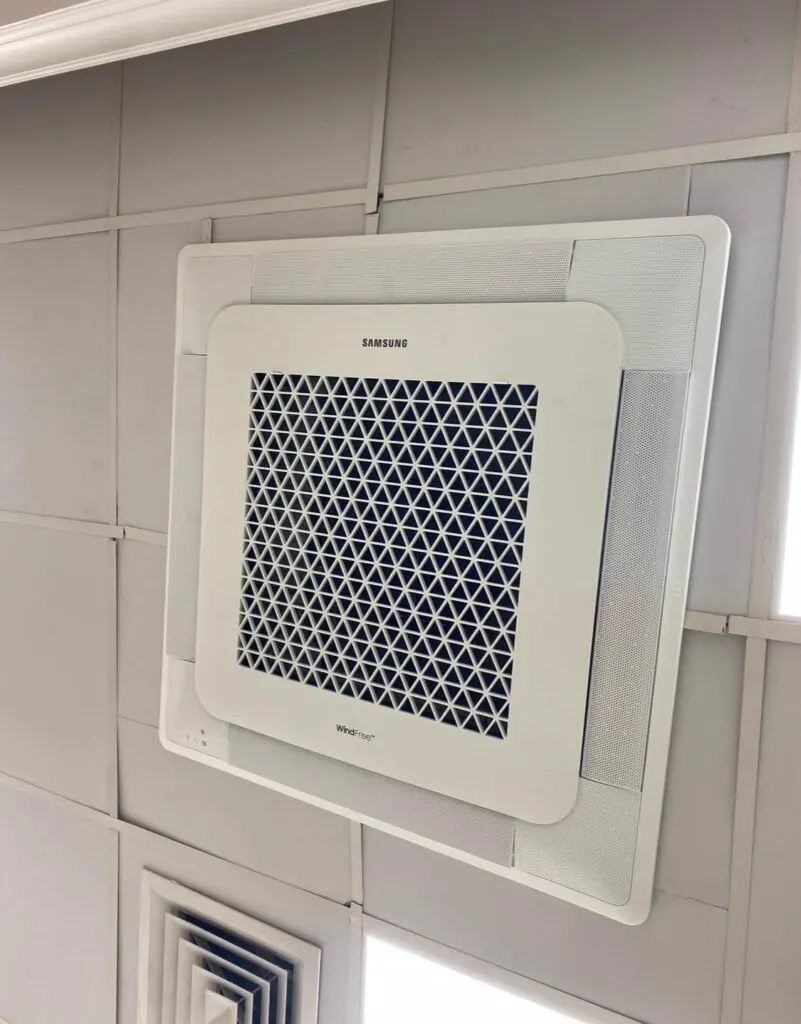
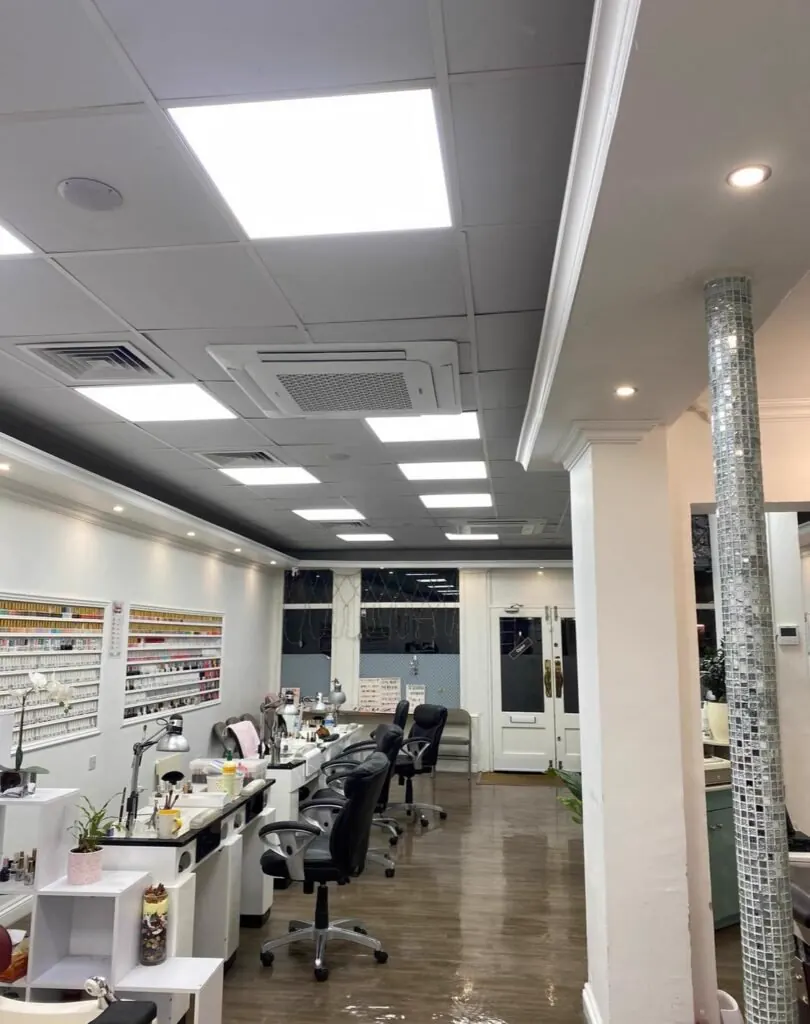
In dining rooms the priority is quiet: we specify wall-splits for cafés and smaller rooms, discreet ceiling cassettes for open-plan floors, and multi-split or VRF systems for larger venues — from Daikin, Mitsubishi Electric, Samsung, LG, Fujitsu, Toshiba, Panasonic and Haier.
- Evening, overnight and weekend installation as standard — no lost covers
- Quiet-first specification for dining rooms and bars
- Designed around your kitchen extract, not against it
- Planned maintenance with priority call-out for contract customers
Pubs, bars & restaurants across the Midlands
We're based in Basford, Stoke-on-Trent and cover hospitality venues within a 50-mile radius — same engineers, same diagnostic kit, from a single cellar cooler to a full-venue fit-out.
Cellar Cooling & Hospitality FAQs
Cellar temperatures, servicing intervals, F-Gas duties and kitchen cooling — answered.
Do you install cellar cooling, or only service it?+
Both. We design and install new cellar cooling systems — for new fit-outs, replacements and cellars that have never held temperature properly — and we service and repair existing systems whether or not we installed them. Every installation starts with a free cellar survey and a fixed written quote.
How is a cellar cooler sized for my cellar?+
Properly sizing a cooler means calculating the actual heat load, not guessing from the room size alone: cellar volume, how well it's insulated, how often the door opens, barrel and keg throughput, and heat from adjoining kitchens or plant all count. We work this out at survey — undersize it and it won't hold temperature on a hot weekend, oversize it and you pay for capacity you never use.
What temperature should a beer cellar be?+
For a mixed cellar serving both cask ale and keg products, the industry standard is 11–13 °C — Cask Marque audits pubs to a band of 10–14 °C. Lagers and keg products are then chilled further on the way to the tap, typically dispensing at 5–8 °C, with extra-cold products at 0–5 °C.
Should I switch my cellar cooling off overnight or in winter?+
No. Cellar cooling is designed to run continuously and hold a stable temperature — brewery guidance is not to turn it off even for a short time, because temperature swings affect beer quality. If winter running costs are a concern, talk to us about servicing and controls rather than switching off.
How often should a cellar cooler be serviced?+
We recommend a professional service at least annually, or 6-monthly under a planned maintenance contract for busy sites — cellar coolers work all day, every day in a dusty environment, so coils and filters clog faster than comfort air conditioning. The British Beer & Pub Association notes a poorly maintained cellar chiller can use up to 25% more energy.
Do F-Gas regulations apply to my cellar cooler?+
Yes. Cellar coolers run on HFC refrigerants covered by the UK F-Gas regulations, which require leak checks at set intervals based on the system's CO₂-equivalent charge and require anyone working on the system to be properly qualified. Airtastic holds F-Gas Company Certification, every engineer is F-Gas Category 1, and we issue the records your compliance file needs after every visit.
Can you install air conditioning in a commercial kitchen?+
Yes — but it has to be designed to work alongside your kitchen's extract ventilation, not instead of it. Extraction removes heat, moisture and odours at source; air conditioning then holds a workable temperature for your team. We design the two to work together and can install out of hours so you don't lose a service.
Does a restaurant legally have to have air conditioning?+
No — HSE states there is no legal maximum workplace temperature. Employers do have a duty to keep temperatures comfortable and provide clean, fresh air, and HSE names catering kitchens among the workplaces at risk of heat stress, listing air conditioning among its recommended controls. In practice, comfort is what keeps kitchens workable and customers seated.
Cellar playing up, or a dining room running hot?
Book a free site survey and we'll look at the cellar, the kitchen and front of house in one visit — with a fixed written quote and no obligation.